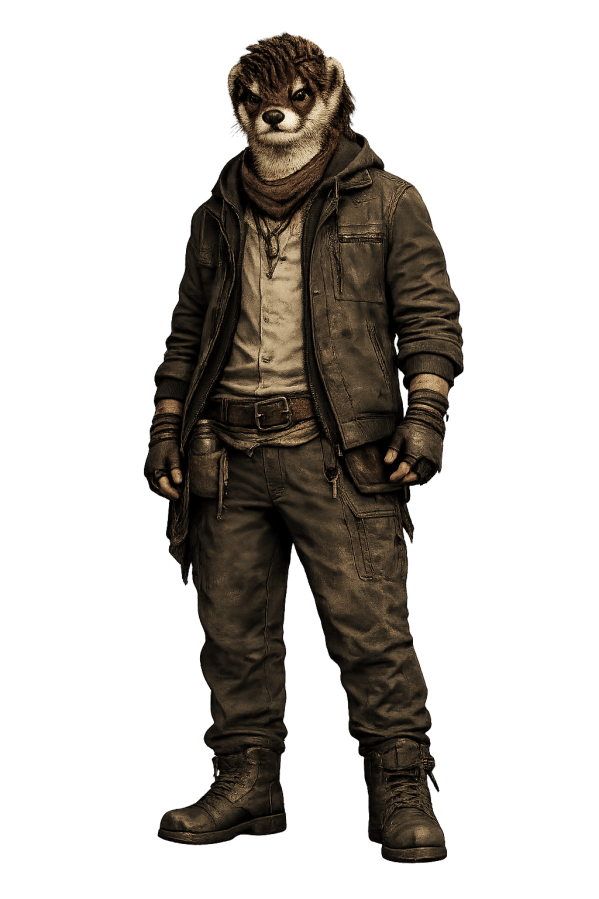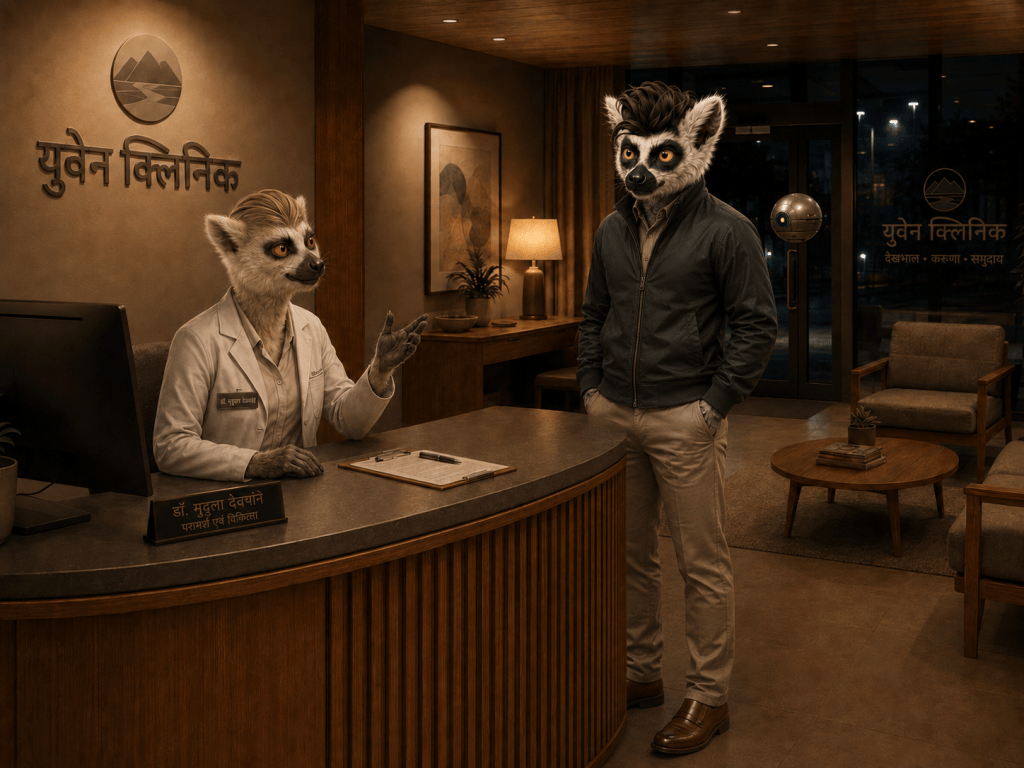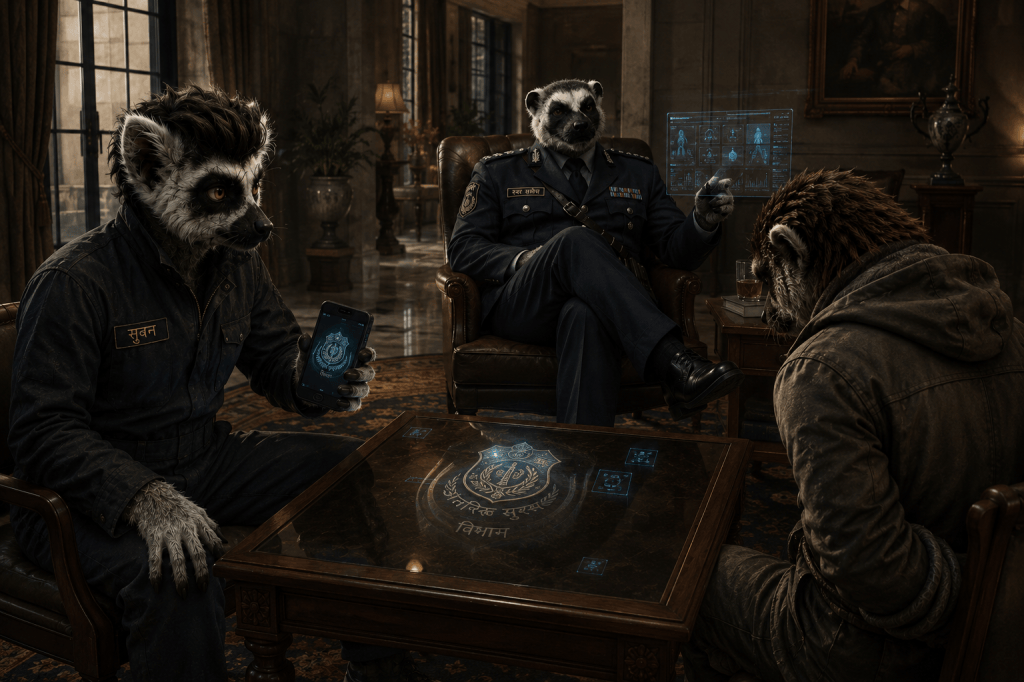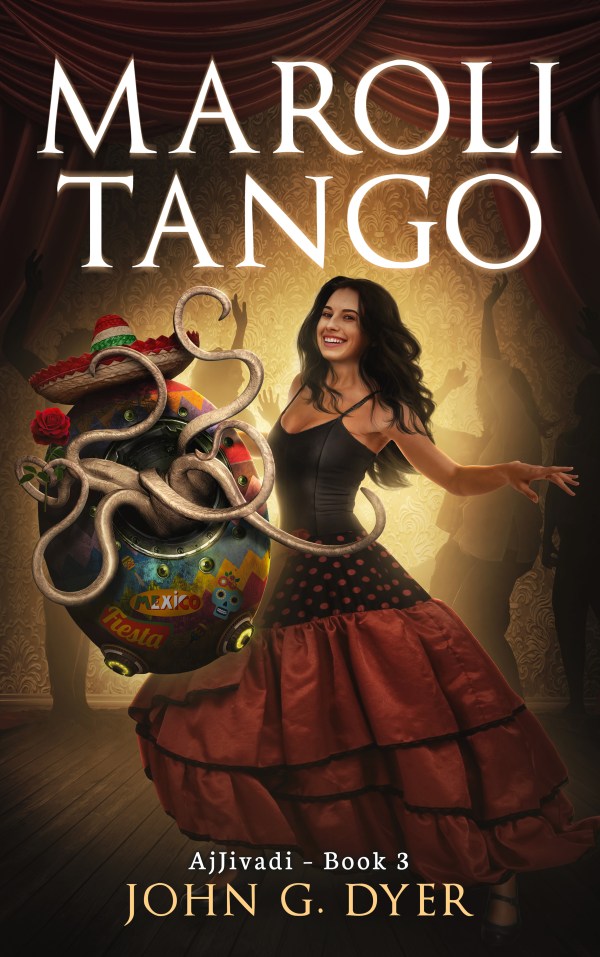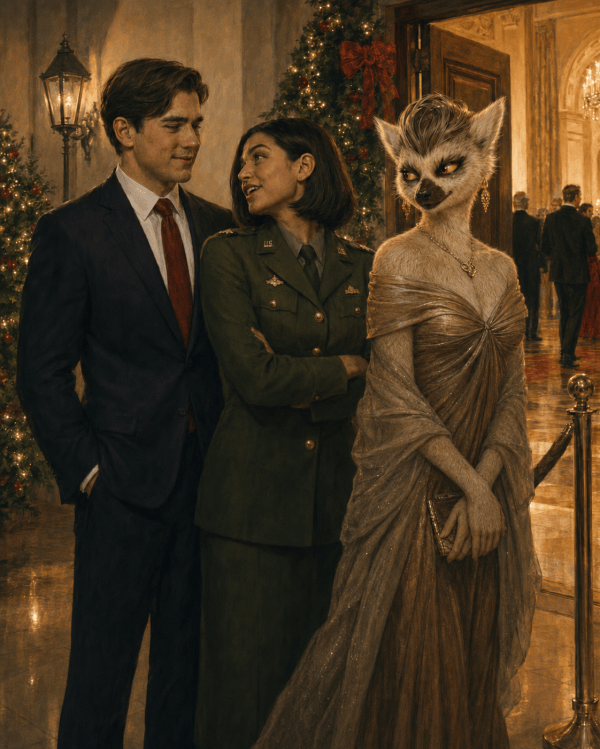
Ruksa Zila — An airborne estate from the pages of Maroli Tango
I will eventually have to sketch the design by hand.


Read the book at https://marolitango.substack.com/p/chapter-2
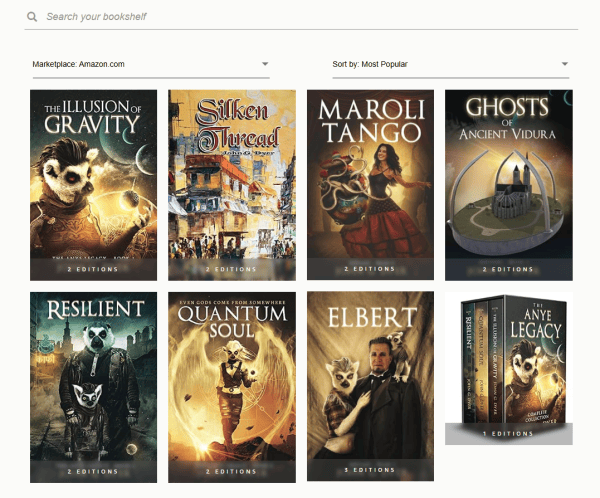
Books Worth Reading
I will eventually have to sketch the design by hand.


Read the book at https://marolitango.substack.com/p/chapter-2
Lots of prompting. More than you might expect.


An essay about comparing oneself to others inspired me to ask ChatGPT about Alan Moore.
Based on the chapters and openings you’ve shown me, your writing overlaps with Alan Moore less in surface style and more in architectural ambition: the sense that every scene is part of a much larger moral, historical, political, and metaphysical machine.
Where you compare most strongly:
1. You both build worlds as moral systems, not just settings.
Moore’s best work does not merely invent alternate worlds; it asks what those worlds mean. Watchmen is not just superheroes plus politics; it is a study of power, myth, surveillance, sexuality, fear, nostalgia, and apocalypse. Your Anye universe works similarly. Ships, temples, maroli, SagGha institutions, Ruksa Zila, Disclosure, Dust Cloud stakes, and Eeka politics are not decorative. They are pressure systems that reveal character, civilization, duty, and belief.
2. You share Moore’s fondness for dense implication.
Moore often writes as though the reader has opened one window into a vast archive. Your prose does that constantly. A line like “EIGHTEEN MONTHS AFTER ANYE CIVILIZATION CAME OUT OF THE SHADOWS, 25,000 years after their arrival on Earth…” has the Moore-like effect of dropping the reader into a history already in motion. The story feels excavated rather than invented on the spot.
It's kind of like how older men see themselves in the mirror. "I don't look so bad."
Click here to read the entire novel, near-final-draft, for free.
Reading these as the opening of Maroli Tango, I’ll evaluate each chapter for the specific question of whether a reader will turn the page. Retention depends on momentum, clarity, and stakes — not literary merit. A beautiful chapter that confuses readers loses them; a workmanlike chapter that makes them lean forward keeps them.
Ch. 1 ~ Artifact — 7/10 A strong cold open. The cylinder emerging near Saturn is genuinely arresting, and the Mehrenholz/past-life detail does a lot of work fast. The closing exchange (“a neglected old barn… start more trouble”) gives the reader something to chew on. Risk: dense proper-noun load (Bharamin, Anye, Anuraga, Mehrenholz, Khalsa, Bjornson) for a first chapter. Veterans of the series will love it; new readers will feel the water is deep.
Ch. 2 ~ Legacy — 9/10 This is your hook. The shift from cosmic to intimate — a President and a banker dancing awkwardly, a surprise kiss under mistletoe — is exactly the dual-register your series is built on. Mason and Marie get introduced through charm rather than exposition. Retention here is high because readers now have a relationship to track, not just a setting.
Continue reading “ClaudeAI Rates Audience Retention”I am not anticipating a movie deal
Click here to read the entire novel, near-final-draft, for free.
Becky Chambers + Lois McMaster Bujold + The Expanse + Ada Palmer + a family chronicle + frontier settlement comedy + theological space opera.
The nearest neighbors:
Especially the Vorkosigan Saga.
Bujold is probably your closest craft cousin for mixing space opera, family, military/political institutions, romance, comedy, competence, and moral consequence. The Vorkosigan books are long-running SF/space-opera works with major attention to family, hierarchy, personal honor, military culture, and social continuity; the series won the Hugo Award for Best Series. (Wikipedia)
Overlap with you: huge cast, aristocratic/merchant-military structures, moral comedy, family as civilization-bearing unit.
Difference: Bujold is tighter, more novel-shaped, more character-centralized around Miles/Cordelia/etc. Your work is more mosaic, serial, and civilizational.
There once was a prisoner at Dachau, who kept a tiny ceramic frog in his pocket, a silent prayer to God that he not be forgotten.
In later years, he became a woodcarver, producing pocket-sized figures of frogs.
One day, a patron mentioned the frog was a symbol of liberation.
“Oy vey,” the man said. “Is that what I’ve been talking about?”
Artists are notorious for inscribing subtle traces of life’s struggles into the texture of the work — unaware of hidden meaning.
But I am a man of few complaints. Instead, I mumble about discipline, calling, stewardship, covenant, and moral formation over time.
Not explicitly. That would be counter-productive. Fiction is supposed to be entertaining.
Continue reading “A Dilemma in Wearing the Coat of Many Colors”Find the book here, free, on Substack.
254 chapters.
101,573 words.
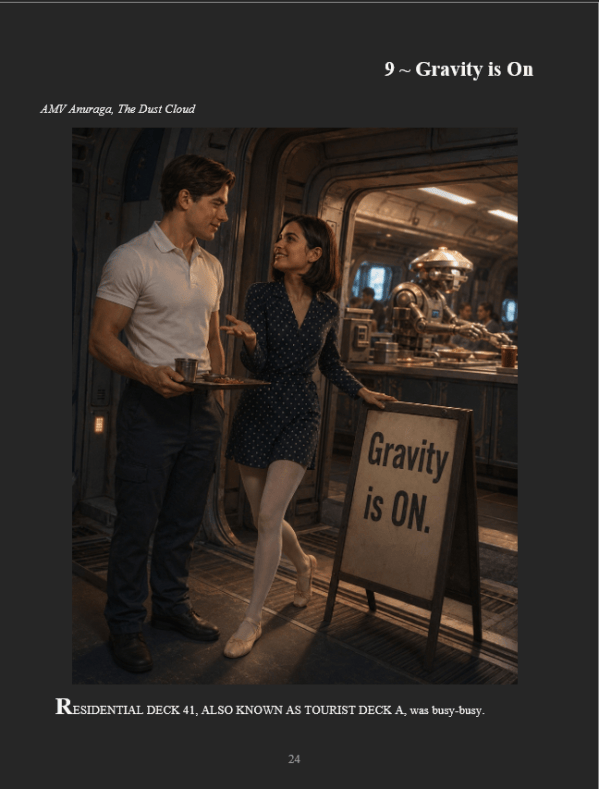
617 pages, with illustrations.
3 1/2 years in the making.
The manuscript will continue to be a work-in-progress until publication on KDP.
Comments invited.
Recent Comments