Free Book Promotion

My fifth novel, Elbert: AjJivadi – Book 1, launched on October 3.

A customer said, “Definitely a great storyline, you won’t be disappointed. Easily lost track of time when reading.”

On Kindle Unlimited, someone read Elbert and all three previous books in the series, non-stop, in seven days. I’m going to say the book isn’t terrible.

I’m running a one-day free book promotion, starting tomorrow, October 21.

The object of this exercise is to garner verified customer reviews.

Please read a few pages. If it’s not for you, give up, no apologies. If you enjoy it, and I think you will, please leave a review! Free, October 21. Click the 'Buy on Amazon' box, under the cover art or tell your phone to remind you tomorrow. Thanks!

BookTokked — John Dyer Writes

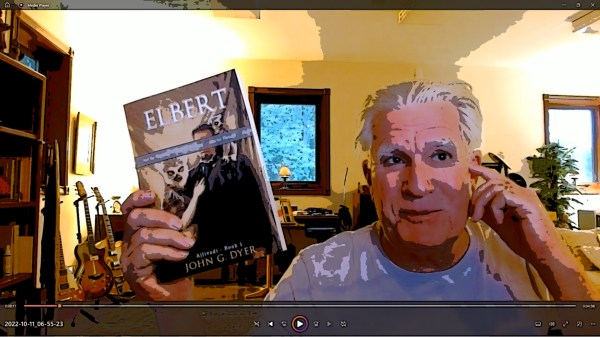
In a few days, after I receive my Logitech Litra Glow Premium LED Streaming Light, I’ll recite the script for my latest video. Those who’ve been following my essays know what this is about — I’m trying to hook an audience for my novels. Come now BookTok, BookTube, and Bookstagram. I sure hope it’s worth the trouble.

And who knows but there might be a more productive outcome if people start sharing these posts. Just mentioning it, in case there’s a button under your finger that could make that happen, and thank you.

Here’s the script. Feedback invited.

Continue reading “BookTokked — John Dyer Writes”

Story Branded — John Dyer Writes

If one is to succeed as an author he must say words that will inspire readers to buy books. If this can be accomplished in one or two sentences, the author will have discovered his story brand.

So, I’ve been pestering everyone who’s read my work to wax eloquent, such that keywords might be extracted. To my surprise, a fellow author said my novel Elbert is sentimental.

I tend to agree. The storyline, set in the late 1920s, is nostalgia-inducing by default. That said, it didn’t feel like an idea I could use to describe the entire catalog.

A review of synonyms ensued. I dithered over ‘old-fashioned’ and ‘homely’. I wrote a ream of ad copy. Nothing clicked. I kept coming back to ‘sentimental’, a longing for the good old days, when everything was better, or at least seemed like it.

Even though most of my books are Science Fiction, I have to admit the word ‘sentimental’ covers a lot of ground. I’ll hold onto it for a while. In other news …

Continue reading “Story Branded — John Dyer Writes”

Animated — John Dyer Writes

I assembled a book trailer video, which you may peruse via the link below. All of the art was created by others, except the script, which is only ‘art’ in the sense that I strained myself writing it and now cannot bear to read it without editing.

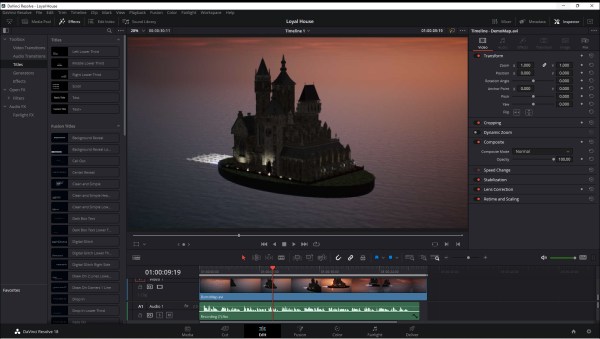
Composed in DaVinci Resolve. A testament, of sorts, to what a person can learn from YouTube tutorials.

Book Trailer — Elbert: AjJivadi Book One

Plugola — John Dyer Writes

This coming October I’ll publish, I hope, a breakout novel. ‘Elbert’ is action, adventure, and family drama — a fusion you don’t often see in Science Fiction. It’s a fun ride across an unlikely landscape, a moving tale with a positive vibe.

I’m staking out my own territory with original and intelligent stories, written for thoughtful readers. ‘Elbert’ isn’t rocket ships and ray guns. It’s about challenges we face creating successful lives, a noble existence, a hopeful future.

I’m shopping for word-of-mouth publicity. If you like the pitch, follow the link. If you like what you see, please tell your followers.

Regards,

John G Dyer

Camera Familia #22 — John Dyer Writes

Manila, Philippines. Circa 1958. A year before this photo was taken, Mom took me to visit a friend who lived in an apartment near downtown Manila. I had never been in an apartment before. I didn’t even know such things existed.

The lady had a dachshund named Gretchen. I had never seen a Dachshund before.

Gretchen knew a trick. The owner balanced a cookie on the dog’s nose. The dog stood still. The owner said, “Okay.” The dog flipped the cookie into the air, and ate it. I had no idea dogs could learn tricks.

Gretchen had a litter of puppies. I had never seen puppies before.

Can you believe it? I was seven! Anyway, we took one home, and someone in the family, probably Mom, named her Hildegard. We called her Hildy. Years later, Mom claimed the dog’s name was actually Brunhilda. It was Hildegard. These were important events for me. I remember everything about it.

One day, Hildy had puppies. I had no idea how that happened, but I got to pick one for us to keep. I named him Mercury. We called him Mergy.

These were standard Dachshunds. Mergy weighed about twenty pounds as an adult. See the photo, Mergy and me, circa 1965.

It never occurred to anyone to teach these dogs tricks, but they did have a behavior. They hunted rats, big old Chinese Brown Rats, about a third their size. They’d bag them early in the morning, after Lucina got up, and stack the bodies on the front porch. Dad would come out for the newspaper to find Hildy and Mergy guarding their catch, waiting to be praised.

Technically, Mergy was my first pet, and I’ll always remember him that way — but both dogs slept with Lucina, so they probably thought they were hers.

At the time, I had no idea that was an option.

If you're enjoying these essays, please subscribe.

Undecided — John Dyer Writes

I’m wearing a mouth guard again, after grinding my teeth with sufficient force to break a molar, on account of I don’t like my new job.

I’m not talking about the writing. That’s an activity. This is about promoting myself as an author. That’s a job. The mission, if I choose to pursue it, is selling thirty thousand books a year, minimum. If I was a younger man, trying to make a living as a novelist, that would be one thing.

But I’m retired, and disinclined to seek approval. My motivation to advertise is nothing more than a nagging sense the work itself, not the author, might deserve attention. I assure you; this is not a case of superficial humility. I’m sincere.

In the grand scheme of things, there are few endeavors that really matter. Producing entertainment is not on the list. That’s one vote against shouting my name from the rooftops.

Works of fiction flow out of an author’s perspective. Stories have the power to elevate the spirit, educate, inform, inspire, and provoke thought. My books might offer some of these qualities. One vote in favor.

Publishing is a tough game. I don’t want to go back to work. If struck by illness, I won’t say, “I’m glad I spent my last days trying to sell books.” Is that three votes against? I think it is.

I write optimistic stories about places you’ll never go, people you’ll never meet, things you’ll never see. That these stories are constructive in nature is almost accidental, a reflection of what I believe, and my observations of the many ways in which individuals go about creating successful lives.

Does that make the material different enough to stand out? I don’t know. I’ve been chatting with a publicist, to whom I said, “Someone will have to convince me (the work) is remarkable”. Upon reflection, I realize that’s too much to expect. Besides, there’s no objective way to determine if my books deserve an audience, other than the option of allowing the marketplace to decide.

Oh, yeah. That’s the conundrum I’m fussing about, right now.

If you’re curious, click here. If you’re looking for a punchline, I don’t have one, else I’d already know what to do. One thing I do know is that worrying isn’t good for me. I have a sore jaw to tell me that.

Camera Familia #21 — John Dyer Writes

Manila, Philippines. Circa 1958. I remember very little about my enlistment in the Philippine Cub Scouts, but there’s no refuting photographic evidence — I was in it. There was a guidebook, tasks to accomplish, skills to acquire. We must have gone on outings. I appear to have made acquaintances. I don’t recall any unpleasant moments.

The goal of the organization was to build virtue, self-reliance, good citizenship. As far as I know, it worked.

If you're enjoying these essays, please subscribe.

Camera Familia #20 — John Dyer Writes

Botocan, Philippines. Circa 1957. The life we imagine for ourselves is not necessarily the best life for everyone, but ideas will spread, and people will make choices. Filipinos valued their culture, but postwar Western nations had a lot to offer.

Population was expanding. Cities were growing. Modernization outward was essential, if for no other reason than to increase crop yields. In the provinces, traditional ways would eventually be displaced.

Thankfully, we were there in time to witness that which came before. In the photo, a man smiles at the camera, apparently serene, living in the moment. At arm’s length, a water buffalo, a cart, a harvest. I suspect he knew, as all of us should, that the most important things in life are usually right there, at arm’s length.

If you're enjoying these essays, please subscribe.

Camera Familia #18 — John Dyer Writes

Manila, Philippines. Forbes Park, 1956. Around the time of this photo, I asked Dad why we rarely saw my classmates at the Manila Polo Club. He replied, “Not everyone can be a member.” I was too young to process the long explanation but there was, for instance, a ceiling on enrollment. One needed a sponsor. You had to be voted in. It was expensive. Some folks lived on the beach, or had swimming pools, or spent all their time at the golf club. Being able to walk through the front door at MPC didn’t necessarily make us special.

So, this is what that looked like.

The club had (has) a twenty-five meter swimming pool, tennis courts, badminton courts, a duck-pin bowling alley, riding stables, party houses, a ballroom. Even at the tender age of six, I could see our life had experienced an upgrade.

My mother, and stepsister Carolyn, waxing glamorous on the low board. We weren’t in Flintstone, Georgia anymore.

If you're enjoying these essays, please subscribe to receive notifications.

Blog at WordPress.com.

Up ↑