
I would have said, “Sure, it does”, if I had thought about it, but I didn’t until this morning.
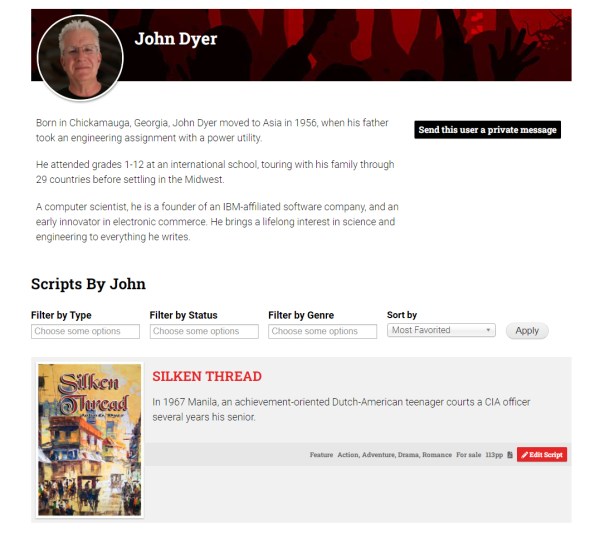
The robot’s analysis of my Silken Thread screenplay is 14,343 words.
Deliverables included a scene-by-scene comparison with the novel, an adaptation map, and a beat-sheet.
In its opening comments, the machine said —
I would edit it for marketability, but not because the script lacks value. It already has a distinctive mix of period romance, espionage texture, and later action-thriller escalation. What it most needs is sharper packaging: a clearer promise of genre, faster escalation, and a more focused spine.
What’s already helping you:
The central hook is strong: an intense romance between Barb, 28, and David, 18, beginning in 1967 Manila, with Mandarin/CIA intrigue in the background. That is unusual and memorable. The reunion section in 1969 Texas/Houston also has real movie energy, especially once David’s parallel lives start stacking up: CIA analyst, BLM ranger, student, equipment operator.
You also write vivid set pieces. The Houston reunion works, the sinkhole/stabbing sequence is cinematic, and the Singapore home-invasion material feels like a different, larger movie arriving late in the script.
Umpteen pages later, we had a plan
Working outline for revised screenplay
1. INT. SKY RESTAURANT, HOTEL NEW OTANI, TOKYO – NIGHT
Objective: Establish that David already has a plausible, prestigious future in Asia before Barb enters his life.
David dines with Ward Aarens and Wu Qiang; Qiang offers him a future in business if he learns Mandarin and becomes useful in the right way.
Keep short: one table exchange, one clear offer, one strong visual of young David looking out over Tokyo.
2. EXT. TOKYO STREET – NIGHT
Objective: Introduce the film’s core thematic conflict: a life of strategic advantage versus a life of love.
Ward walks David through the rain and explains that the kind of life Qiang offers may come with a wife chosen for business and desire displaced elsewhere.
Do you have a screenplay languishing in a file folder? You should try this.


 John Dyer Writes
Recent Comments