
There once was a prisoner at Dachau, who kept a tiny ceramic frog in his pocket, a silent prayer to God that he not be forgotten.
In later years, he became a woodcarver, producing pocket-sized figures of frogs.
One day, a patron mentioned the frog was a symbol of liberation.
“Oy vey,” the man said. “Is that what I’ve been talking about?”
Artists are notorious for inscribing subtle traces of life’s struggles into the texture of the work — unaware of hidden meaning.
But I am a man of few complaints. Instead, I mumble about discipline, calling, stewardship, covenant, and moral formation over time.
Not explicitly. That would be counter-productive. Fiction is supposed to be entertaining.
My stories are about ordinary people confronted with remarkable circumstances. In six out of seven books, the medium is Literary Science Fiction Action-Adventure Intrigue Family Drama Space Opera.
LSFAAIFDSO. Nine words. A failure to consider the importance of brand messaging.
And a natural consequence of writing from inspiration — emoting everything I care about, subverting any hope of concise explanation.
I spent three-and-a-half years writing Maroli Tango — the most effort I ever invested in a story.
The near-final draft stands at 103,000 words. The excised count is 80,000 — enough material to fill the pages of another book.
Ten master edits, so far. If a chapter does not move the plot forward, enrich the landscape, or reveal pinch points — it’s gone.
Brutal. Painful. A litany of regret. A necessary application of craft, so that what remains will satisfy readers.
In the process, I was conserving ideas that matter — though I did not know it.
Literature at its best is an instrument of culture, a narrative space wherein tribes itemize the cost of becoming whole; the weight of responsibility, the foolishness of entering a cave where a bear is known to live.
Stories — a means by which civilizations promote knowledge and values, particularly among the young.
“Oy vey,” said the Author. “Is that the business I am in?”
No. It’s a hobby. I did not retire from one vocation to take on another.
Also, yes.
Stories inspire. The Golden Age of Sci-fi shaped my imagination in ways I am still processing. Fiction frames possibility — and reminds us to show up for life.
I have already built a good life. Selling books is a lot of work. Why bother — and if I do, what should I say?
I could use the word wholesome, and its synonyms, a lot.
I could bill my act as a philosopher’s tightwire stunt above perilous Secular Canyon.
Or throw myself upon the mercy of the comps.
The Expanse (political complexity, working-class heroes, a lived-in universe)
Becky Chambers’ Wayfarers series (character-driven, optimistic, found family)
Station Eleven (civilization under existential threat; why life remains worth living)
Ursula K. Le Guin’s Hainish Cycle (anthropological SF, philosophical restraint)
The West Wing (smart people making hard choices; idealism tempered by pragmatism)
That’s a lot of territory. Could I boil it down to a single sentence? Probably not.
Will shoppers keep reading after the second comparison? I have doubts.
Consider this excerpt from Maroli Tango:
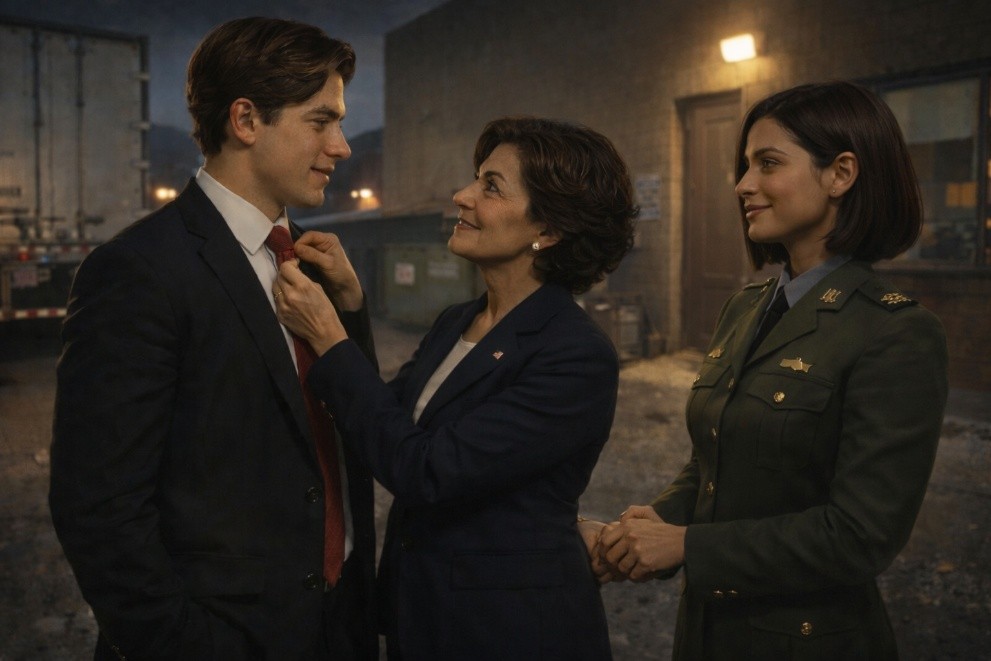
The landing zone was a dumpster farm behind a strip mall, half a block from a franchise bar and grill in Alexandria, Virginia.
The sun had been down half an hour. Mason dropped the shuttle alongside a semi-trailer with a flat tire. A dusk-to-dawn fixture above a mattress store loading dock was the only ambient light source.
Somebody, somewhere, was smoking a cigarette.
Carmen adjusted Mason’s tie. “That’s a good-looking suit.”
“It’s a thrift store Armani, worn once at a Bar Mitzvah.” He cracked a smile. “It made me feel short for my age, so I looked up the donor.”
Family Drama, low volume, chatty. This passage fits the Cozy Space Opera category, and I am tempted to adopt the tag.
However, two paragraphs down:
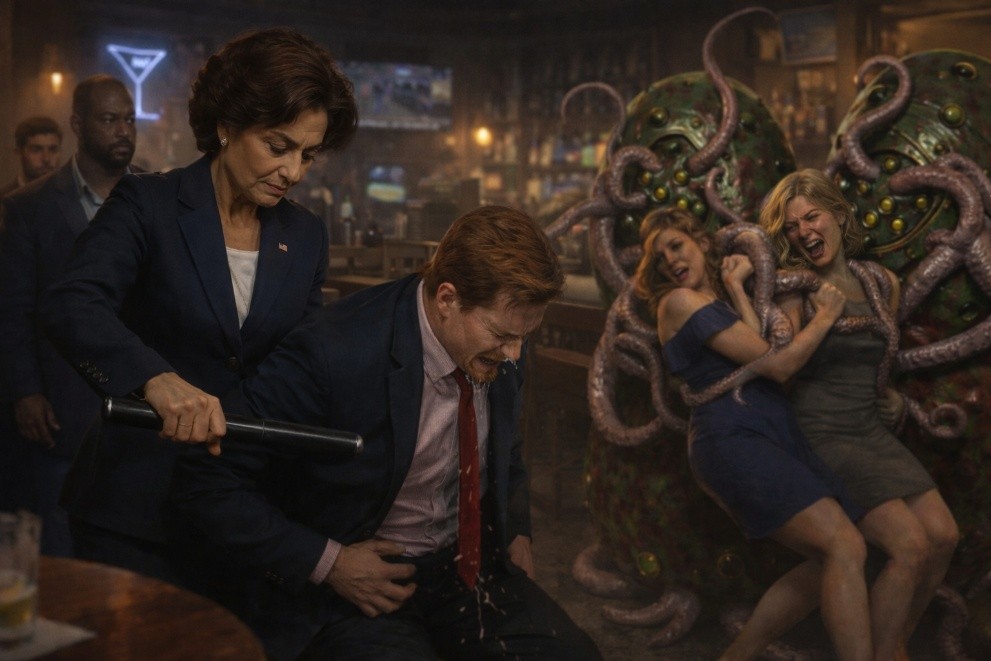
A man and two women came through the front door, conversing as if all three were deaf.
The man said, “I’m going to take that stupid bitch down.”
The trio ordered martinis, wiggled fat bottoms onto wobbly bar stools and laughed as though sharing a delicious joke.
Whereupon Carmen Benequista strode into the establishment with Brandon Lopez and Daryl Price on her heels.
She trotted up to the bar, snatched her victim off his perch and punched him in the stomach with a close-quarters riot baton.
I checked the standard. Maroli Tango is not cozy space opera.
Back when I was about to start my fifth novel, I consulted a guide on the topic of writing for a young audience.
I should have done it sooner. Fortunately, I had not crossed the line by much — and only twice.
Authors are advised to provide a framework within which young readers may interrogate real-life concepts — such as virtue, courage, nobility, and moral ambiguity — while avoiding lurid or gratuitous content.
Maroli Tango’s overall ambiance is upbeat, positive, optimistic. This is deliberate — life can be ugly enough without pouring poison in our own ears.
Conflict drives drama. Passion drives relationships. Bad things happen to good and bad people.
Lurid, however, undermines the dignity of stories, actors, and authors.
Carmen beats up an antagonist. Marie feels sorry for him. The plot thread is about consequence. It stays.
Which brings us to the topic of suffering.
In the final chapter, I wrote:
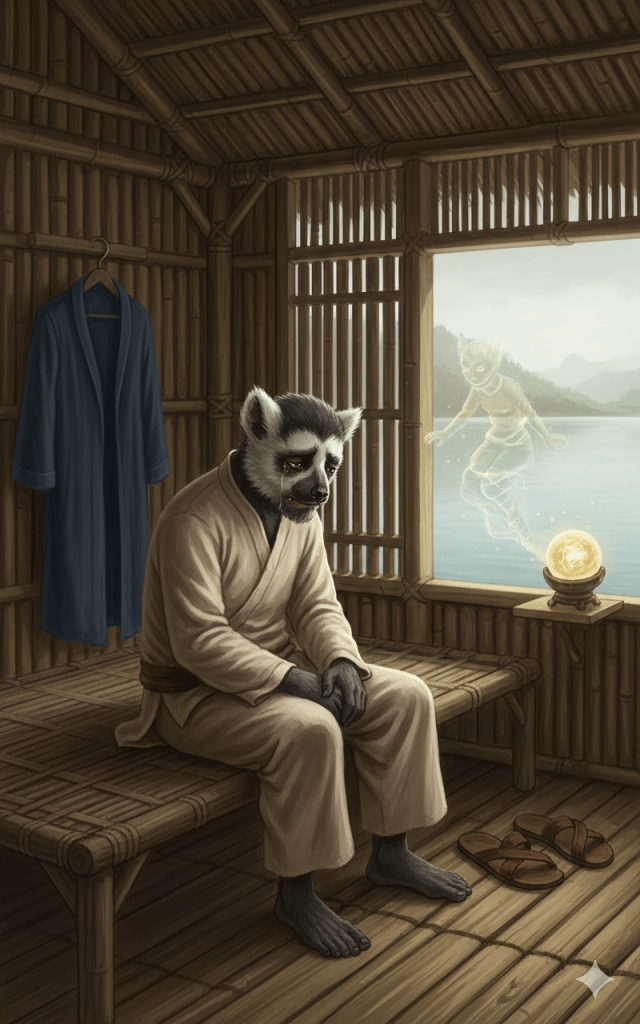
On the morning following uneventful passage of Earth’s sun through the Dust Cloud spiral, the AptakArin Isa Kaviza woke to find himself alone in a bamboo stilt house, upon the shores of Goosey Kuot Lake.
Sattva Pala’s hollow in the bed was cold, her robe on its hanger, sandals left where Isa could trip over them, again.
He shouted at the walls, filling the space with sorrow, regret, anger and despair, then cried until his eyes ached.
Later, at a memorial service, a benediction is offered:
We talk about the unfathomable will of God as if we can’t figure it out for ourselves, but we know what God wants from us, even as we turn away from virtue, determined to get it wrong.
I don’t know of any purpose more noble than trying to be every day a better person than the day before.
My Anye Universe novels approach faith obliquely — as inquiry embedded in story, character, and consequence.
Church, however, is supporting cast.
Anye civilization is energized by the Great Mysteries. In the contemporary timeline, SagGha is described as “Buddhism, with Catholic fashion sense.”
A core doctrine states, “We do not know God, but God knows us.”
Novice priests go straight from seminary to the Cadre, tightly coupling church and military.
SagGha congregations gather on Saturdays, leaving the temple at Pulina Nava on Jivada available for Catholic Mass on Sundays, officiated by a bishop from Ghana.
A reviewer described Maroli Tango as a fully realized universe with seventy thousand years of history, characters who feel like real people making hard choices, hope tempered by realism — victory possible and costly.
I am a reluctant salesman, but if the work feels authentic, I will accept a compliment for the parts I invented.
The backbone of the story is derivative. I borrowed it from life.
Maroli Tango is in pre-release Beta. Read the novel for free here.


 John Dyer Writes
Leave a comment