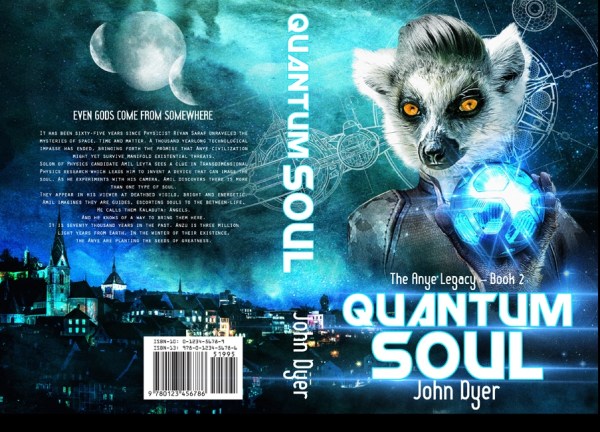
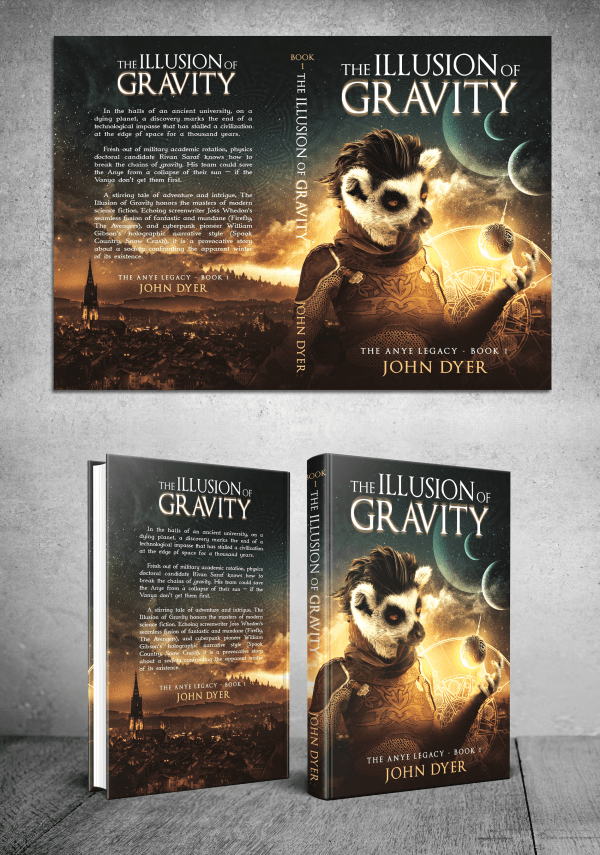
Blurbed.

It is said that it’s a waste of time to do much in the way of marketing until one has at least 3 books to sell. Well, I now have 4 books published, so I suppose it’s time to review the essays I’ve been hoarding on my bookmarks bar. You know the ones – “How to turn your inane ramblings into a #1 Best Seller in 5 easy steps.” 

Fortuitously, Ricardo Fayet over at Reedsy sent me an email the other day – me and probably 150,000 other people, not that I’m complaining – entitled The Ultimate Guide to KDP: How to Succeed on Kindle Direct Publishing. I’ve seen this advice elsewhere – but it’s neatly organized and, as far as I can tell, all the salient points are covered.

Number 1 – Create a polished cover.

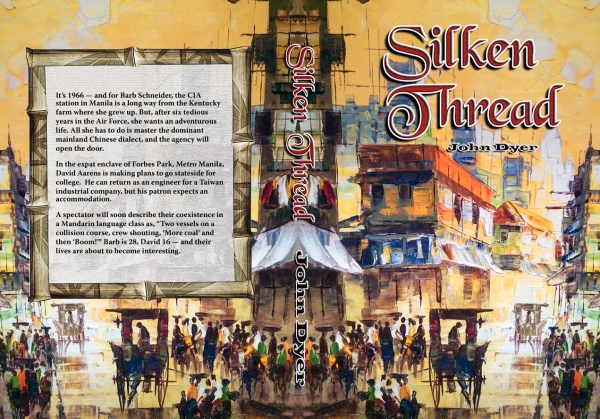
I think I have that, even though I didn’t use Paul Trif at TwinArtDesign for Silken Thread, choosing to do that one myself. I know – that’s often a mistake. Paul made 3 great covers for my Anye Legacy books and there’s no reason to think he wouldn’t do it again. Be sure and tell me if you think I’ve goofed on this one, otherwise I’ll blissfully move forward not knowing any better. Continue reading “Blurbed.” →

Places I’ve been, revisited …

May, 1972 - Silken Thread dallies in a Hong Kong shop I couldn't stay away from.

David led Barbara down Nathan Road to visit The Radio People, Ltd., a legendary audiophile store not far from the hotel. “This is where I always ended up when mom and dad turned me loose.”

He was prepared to see the place transformed by the incursion of Japanese electronics, but it was much as it had been during his last visit — the sales floor dominated by custom built enclosures of walnut, teak and mahogany, McIntosh tube amps, Uher tape decks, Stanton turntables and Tandberg receivers.

The owner, Albert Chan, shooed a couple of Brits in tweed jackets out the door. “Smoke pipe outside, then come back. I have Xavier Cugat for you to listen.” He lifted his chin at David. “Hey, you got bigger. Why you hair dark now?”

They listened to Mr. Chan’s teak-clad Spectrum loudspeakers, laughably classified as ‘bookshelf’ at 40 pounds each, and a pair of Wharfedale-equipped, Danish modern burled walnut cabinets half the size of washing machines. Barbara saw the look in his eyes. “Are these the ones you’ve been mooning over since you were fourteen?”

“Ones like these. They’ll cost a fortune to ship.”

“They’re gorgeous, and you can’t buy this merchandise anywhere else. Let’s get them.”

She was enthralled by the district’s shopping corridors, channeled through buildings from street to street — stopping to purchase a London Fog raincoat, three scarves, a jade pendant, and rhinestone decorated collars for the dogs. “They’ll look so cute in these.”

David went into a shoe store, coming out empty-handed. “I’m going to stick with my Florsheims.”

They returned to the hotel at five, meeting David’s parents at the reception desk. Lieve Aarens squealed when she saw the collars. “Isn’t this the greatest town ever? Give us half an hour, and we’ll take you to dinner.”

Something I stumbled across …

Whenever I drove past one of those all-aluminum super-modern mobile homes of the 1950s – and I’m talking about mobile homes, not Airstream travel trailers – I always wondered who made them, and what they looked like inside. While doing research for Silken Thread I discovered that some of them were built by Spartan Aircraft.

The company had a short, interesting run – you can find out more at an enthusiast’s website here. Short take-away: the hero in my story is getting a 1959 Spartan Imperial Mansion.

That’s it – just a random share today. Keep reading. We need you.

Goaltending – John Dyer Writes

One of my goals in writing science fiction is to promote an ambience of authenticity — which can be problematic when much of the landscape is mythological. I cover part of this ground by wrapping the fantastic in the mundane — making the story more believable in a visceral sense. Thus, in Resilient, Sattva Pala is introduced as a disembodied soul, brought across a dimensional boundary, raised in the Virtuality under a cloud of presumption that she’s an angel sent by the Gods. In counterpoint, she manifests as a complicated young woman with a confusing life and all the insecurities a person experiences from living in a real world.

In The Illusion of Gravity, a manufacturing executive invests in an emerging technology startup, but doesn’t tell his boss the project is about anti-gravity — a decision that makes sense to anyone who understands how staggeringly unimaginative senior management can be. To close the loop, I devote a lot of energy to making the science plausible — and I think seasoned SF readers will notice I’m staking out my own territory in the genre.

Continue reading “Goaltending – John Dyer Writes” →

Back into the fray ….

Now that I have 3 books to sell, it’s time to get serious about the trimmings. Who likes this version of a story capsule for The Illusion of Gravity? Who hates it? Tell me!

Imagine what it would be like if, in a thousand years, our civilization was little changed from the way it is today. This is the condition in which the Anye find themselves, centuries after building their first nuclear power plants — a mature race still traveling about in ground cars; flying spaceplanes to orbit, but no farther; suffering from disease, war and crime, languishing in hopeful anticipation of an historic moment with the potential to change everything, a blessing that never quite arrives.

 Until, in an event overshadowed by strife and circumstance, an epochal discovery unravels the mysteries of the universe. Physics student Rivan Saraf survives an experiment gone terribly wrong — only to be pursued by foreign agents, intent on either stealing his mentor’s work or killing those involved in it. It will be at Udak, on the boundary of Vidura’s icecap, where his team transforms emerging theory into applied science, demonstrating that gravity is not what everyone thought it was.

Now the question is: Will there be enough time for the Anye to forge a new destiny before an approaching catastrophe destroys them?

Set in an exotic yet familiar world — the Anye Legacy series is a provocative and deeply textured account of a divided people confronting the possible end of their existence.

I’m ready for my close-up.

It is seventy thousand years in the past. Vidura is three million light years from Earth. Stalled in their industrial age for centuries, the Anye are poised at the edge of space under a dying sun.

Finally, in an event overshadowed by strife and circumstance, an epochal discovery unravels the mysteries of the universe. Now it remains to be seen if there’s time for the Anye to forge a new destiny for themselves.

Vividly imagined, demonstrating finesse at wrapping the fantastic in the mundane, the Anye Legacy books venture into literary science fiction territory with strong characters and a thoughtful, well-crafted narrative.

Set in an exotic yet familiar world — a playground for adventure, romance, science, intrigue and space opera — the series is a provocative and deeply textured account of a divided people confronting the possible end of their existence.

Available now, in eBook and print, on Amazon.

Enjoy!

Writing is re-writing

When I scheduled Quantum Soul for pre-order on Amazon, I decided to update Book 1 in the series. There are format changes, a map of Vidura, a cast of characters and I took out a table of contents that served no purpose … but that’s not all I did.

The process required me to read the whole book again, five years after I began writing it, two years after completion, right on the cusp of publishing Books Two and Three. And wouldn’t you know that world building matures over time, and that later books have the potential of informing the content of previous ones: for instance, revealing foreshadowing opportunities and tightening up story lines.

And, in all humility, my writing is better – which it should be at this point.

If I keep my head down, a third edition of The Illusion of Gravity will debut with the release of Quantum Soul. Editing the book for the umpteenth time has been more fun than expected, and I’m very satisfied with how it’s turning out, but it’s not impossible that I’ll miss the date.

I know that some readers will be tempted to order both books at the same time, so I’m going to make a serious effort not to drop the ball. But, here’s the warning – don’t order Illusion of Gravity without making sure it’s the Third Edition. Yes, it’ll probably be listed at 99 cents during the first weeks, but take it from the author – the revision is worth waiting for.

I’ll announce the new edition here, so watch this space. Thanks for reading. We need you. Keep doing it.


Quantum Soul publication date set

Quantum Soul: The Anye Legacy – Book 2 is scheduled for publication on December 3, 2018. You can pre-order the eBook on Amazon here.  The paperback version will appear in Amazon’s catalog on the release date. Here’s the capsule description:

Seventy years have passed since Transdimensional Science was lifted into the domain of working theory.  Aircars navigate the skies, spacecraft cross light-years in hours, and Rivan Saraf’s Advanced Physics program at Nalanda University has produced a successor.

Amil Leyta intended to work in orbital manufacturing, but his studies have taken an unexpected turn. He has built a device that images the essence of life, evoking the remarkable discovery that there is more than one type of soul.

They appear on his monitor at deathbed vigils, shining bright across the boundary between dimensions. He imagines they are Angels, guiding spirits to the between-life, and wonders if the Gods will allow what he must do next.

Because Amil knows how to bring them here.

Would you like to be a first reader in advance of publication? If so, leave a comment on this post.

When the Prologue is too long, but …

It’s necessary. I swear it.

The first upright, tool using anye ancestor to shed his lemur ways was called Purva Maula — Sanskrit, meaning Early Indigene.

By the time his rule ended, the only plug of dry dirt on the planet had split asunder and a new breed of flat faced hominids emerged — still descended from lemurs, but not very different from Homo Erectus.

After the plates finished moving, Vidura’s habitable regions settled out as the Daza Island Chain, MahaDviPa, the North Islands, the Laghu Continent, and the Grahana Archipelago. This happened just in time for an ice age to isolate variants of the new species in their respective homelands, except for the Nivi — who escaped from the North Islands to MahaDviPa.

40,000 years later, when the glaciers receded, Purva Maula’s successors had matured into Anye Nava, a smooth-skinned, modern race evolved for modern times. And, when it warmed up, the Nivi crossed the pole to reclaim their territory, arriving with a written language, carbon steel, farming and a seagoing tradition.

It didn’t take long for them to sail across the Nivi Strait to Laghu, where they came upon the Vanya — who, unlike almost every other tribe on the planet, had yet to discard the habit of killing anybody not connected by family or clan.

After getting their noses bloodied a few times, the Nivi withdrew — with a grim resolve to forever keep the Vanya at arm’s length. This lasted until just before the industrial period. By then, the Concordance of Autonomous Provinces had been formed, and — over protests by the Nivi — the Vanya were invited to join.

They never signed up, but they were happy to immigrate to a land of easy spoils. Cities and towns on the east coast became divided, unsafe and deeply scarred. Locals lived in fear, and those who could, moved farther inland to get away.

Two hundred years into the machine age, it was discovered that Vidura’s population had fallen into sharp decline. The Vanya, aware of how unwelcome they were on MahaDviPa, imagined that the Concordance had carried out biological warfare against them — thousands of citizens died in riots on the east coast.

The government — desperate to appease the Vanya — commissioned a gene tailoring remedy for impaired fertility. Medical researchers tagged a phyletic marker, developing a treatment applied through a bio-engineered virus — which was then rushed into testing.

The Vikara virus, designed to be transmitted only via serum injection, mutated and spread outside the test group. In less than a year, the first regressed-evolution newborns emerged from the birth canals of their distraught mothers.

Anye Adya had a muzzle, fangs, thick fur, and retractable claws. Eight distinct breeds appeared, all pointing back past Purva Maula to primitive lemur genotypes — Mahat Limar, Raji Limar, Iravat, Manu, Azanta, Kopin, Samudri and Vyala.

They didn’t have tails, but it was small consolation — in every other respect, it was clear that the Vikara virus had awakened the Anye’s inner lemur. Worse, the treatment had no effect on fertility.

The event was called the Change.

The Vanya, already convinced the Concordance had provoked the population crisis, exploded in a fit of psychotic rage — a fission bomb was set off in an east coast city, killing 30,000 inhabitants.

The Concordance collapsed. With no structure in place to direct a police response, the western states organized the Cadre — a merchant military force, with orders to expel the Vanya from MahaDviPa.

After being quarantined in Laghu, the Vanya warred with each other until all the fields were burned and all the grain was eaten. Then, ill-prepared to rebuild, and having no industry inside their own borders, the Vanya reached across oceans for an educated workforce.

The Quarantine, it turned out, was porous, and the Cadre lacked both funding and political capital to do anything about it — hundreds of citizens of a newly formed Anye Accord were taken by pressgangs every year.

Their economy now fueled by slave labor, the Vanya stripped the northern half of their continent of all its resources and invaded Grahana to the south. On MahaDviPa, Vanya operatives roamed as far west as Kendra. Grahana, despite having won independence from Laghu, emerged as a port of departure for Vanya insurgence.

And the Change reached its inevitable conclusion — not a single smooth skinned Anye Nava remained.

Within civilized provinces, medical science had lengthened lifespan. Machine intelligence was getting smarter by the day. Farming was mechanized. Clean energy flowed from methane and fission technology. Ambient temperature superconducting motors turned wheels and propellers.

Even so, the future the Anye envisioned had not quite arrived. They still depended on rocket planes to reach orbit. Fusion power hadn’t scaled well. Anti-gravity was a forgotten dream. Their sun was dying, their birthrate declining and a brutal enemy tested their borders every day.

It was the eve of vIkSaNa Antara — the Glance Within. Twelve hundred years after the Anye built their first steam engine, Physicist Bishen Parsanda prepared an experiment based on equations authored by his student, Rivan Saraf.

Regrettably, trans-dimensionally induced matter/energy conversion arrived sooner than expected. Parsanda died in the accident, leaving his apprentice to carry on the work.

A resurgence of technological advancement followed, with Rivan Saraf at the helm. The Anye went into space with vigor, establishing industrial facilities in a nearby star system and moving nearly all manufacturing into orbit.

It has been forty-eight years since the Anye broke out of a stalled industrial revolution. Eight hundred kilometers off the Great Continent’s west coast, a young Daza Islander dreams of following in Rivan Saraf’s footsteps.

A time of discovery has only begun to flourish — the Anye are about to unravel the quantum nature of the soul.
Blog at WordPress.com.

Up ↑