Wedding day had come and gone. Svami Reva Yudhvan and Stena Zaramalla were on honeymoon in, of all places, Harbor Town, Nivi — where Suban Dhava’s natural parents lived.
Suban’s life, he surmised, was in process of being planned.
Cadre counterinsurgency school was three weeks off. In the meantime, Grahana was bringing in crops. Svami Reva’s friend, a district engineer assigned to farm support, needed skilled workers.
During his first ten days on the job, Suban cut up a derelict harvester in a bean field, reinforced a grain bin, revived a water well, rebuilt three irrigation gates and graded a service road.
He told the supervisor he was worn out. The lady said she was not sending him home to Svami Reva with a debilitating injury.
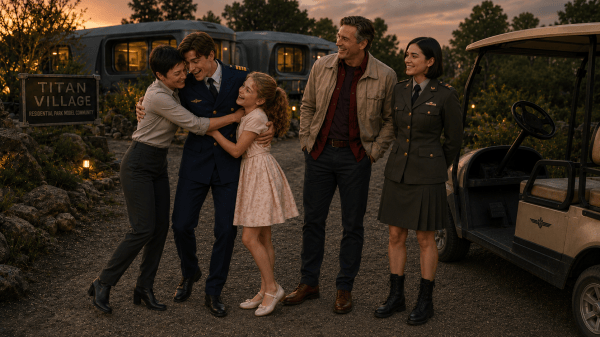
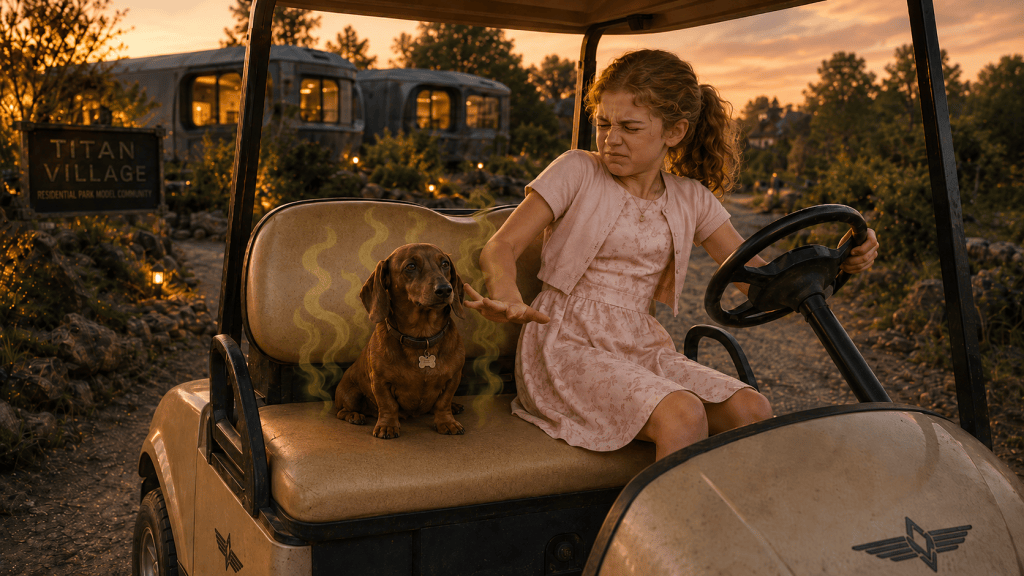
Airspace over Titan Village was busy with weekend campers coming down from AMV Anuraga, so much so that a local air traffic Oma refused a request to land in front of the Fowlkes campsite.
Mason put down at the airfield; a slow, careful descent allowing time for Marie to admire row upon row of identical clover habitats, the presumptive model for Disneyland’s Monsanto House of the Future attraction, Anaheim, 1957.
In Titan Village parlance, ‘Smurf Castles’. Mason said, “I was a plebe in the shipwright guild when they started bringing these down.”
Erin added, “He and I worked the build-out. That’s how we met Glenn and Arya Mehrenholz.”
Marie made eyes at her. “You were ten.”
“I can carry stuff.” She led them out the aft hatch, gesturing north. “The missile silos are that way; full of diamond dust.”
Mason brought up the rear. “It was like, a couple of months before the Disclosure. Damik Balusek and his co-investors wanted out of the project. They dumped the reservation on Glenn for a price he couldn’t refuse.”
“And he made a campground out of it.”
He pointed south. “See the roof sticking up over there? That’s a separating plant. Diamond dust goes into forty-pound bags. Coal dust goes up in smoke.”
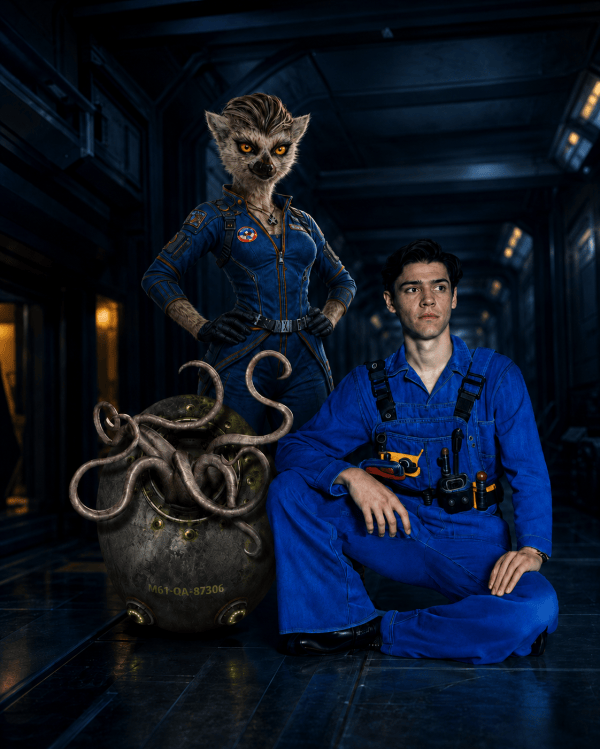
There was a golf cart traffic jam at the main entrance. A maroli grounds attendant served the wicked eye-dot to bad drivers, tertiary tentacles curved to mimic hands on hips.
Mason high-fived him on the walk past.
The maroli told them, “Watch your step. Rattlesnakes are active.”
The warning spooked Marie. “I’ve never been any place where I had to watch out for snakes.”
When Tim and Myra Fowlkes came to fetch them in a golf cart, Marie was high-stepping.
Tim was amused. “Do you have a rock in your shoe?”
Myra was emotional, having just spent a week in therapy — processing missteps that might have permanently estranged her children and yet, miraculously, did not.
She lurched out of the cart, wrapped Mason and Erin in a frantic embrace, and cried her eyes out.
Literary Science Fiction Action Adventure Intrigue Family Drama Space Soap Opera. LSFAAIFDSSO.
The target audience is persons looking for entertainment that is not shallow, lurid, and pessimistic.
I did not retire from the work life for the purpose of toiling at another job. Writing is its own reward. In other circumstances, I would tend to be satisfied with unremarkable sales.
If I did not believe there is an audience for the opposite of ugly.
“Bring back wholesome,” says the book beat.
Dystopia is out. Optimism is in. The literacy crisis is overstated.
I should be in like Flynn — but I am not.
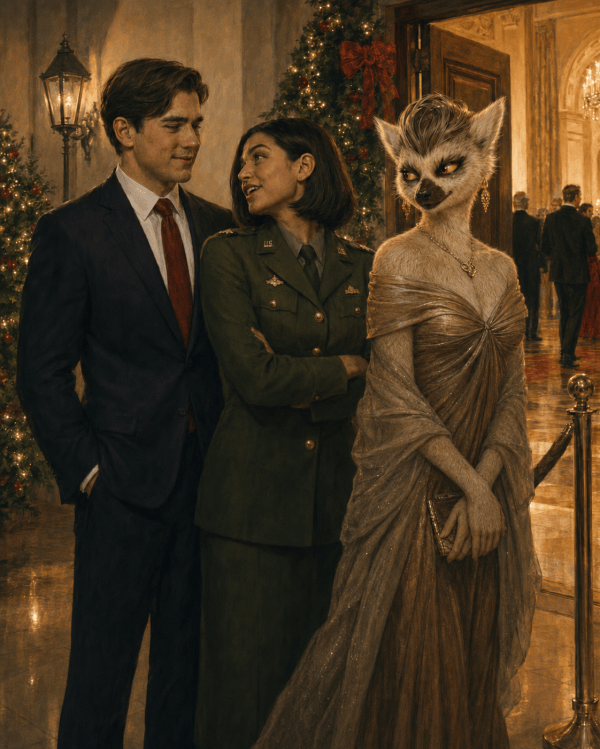
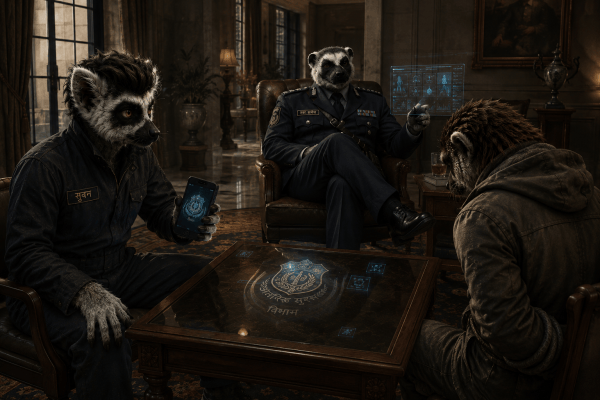
I appended a chapter illustration from Maroli Tango to an author’s discussion thread.
She replied, “I think this looks absolutely terible. There is no life in it. I cant explain why exactly. But I would not want to open a book with this image waiting for me in it. It’s weird.”
Maroli Tango is forty percent family drama, performed on a Science Fiction backdrop.
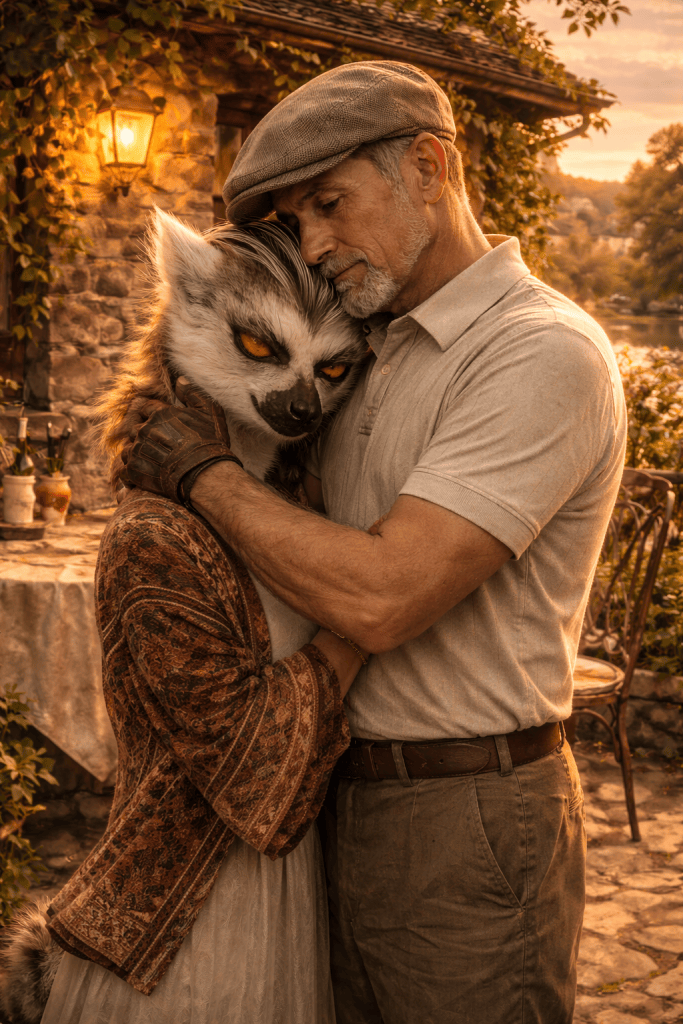
In this chapter, 182-year-old American Civil War veteran Elbert Holland Harrison reconciles with Francine Suraksin Harrison, his 141-year-old spouse-from-another-planet.
The sun was setting in the Loire River Valley when Ranger arrived at the Veronica Charron cottage.
The maroli twins Virgil and Chester bailed out early, waving lighted ground crew wands. Street traffic came to a halt.
Francine watched the final descent from the main hatch, shaking in her sandals, hanging on to Marie Jourdain’s arm as though gravity might fail, sending her pinwheeling into the sky.
Magic stairs unfolded. The next-door neighbors helped her down.
The wife said, “We showed your husband to the patio.”
Virgil entered the house through the front door. Francine went around the side by herself, knees weak, legs like rubber.
Elbert met her on the stone path, arms open. He hugged her tight, kissed her ears, massaged tension out of the space between her shoulder blades.
She leaned in, chin on his collarbone, murmuring, “If you take me back, I’ll never let you go.”
He whispered, “It’s settled, then.”
When I started my Anye Universe series, I had no idea there was such a thing as furry porn. That is not what these books are about.
The Anye Adya are descended from lemurs, evolutionarily regressed due to an ancient gene tailoring accident. Had that not happened, one would be hard-pressed to distinguish Francine from a citizen of Greece.
Sure, it’s weird. It’s SF.
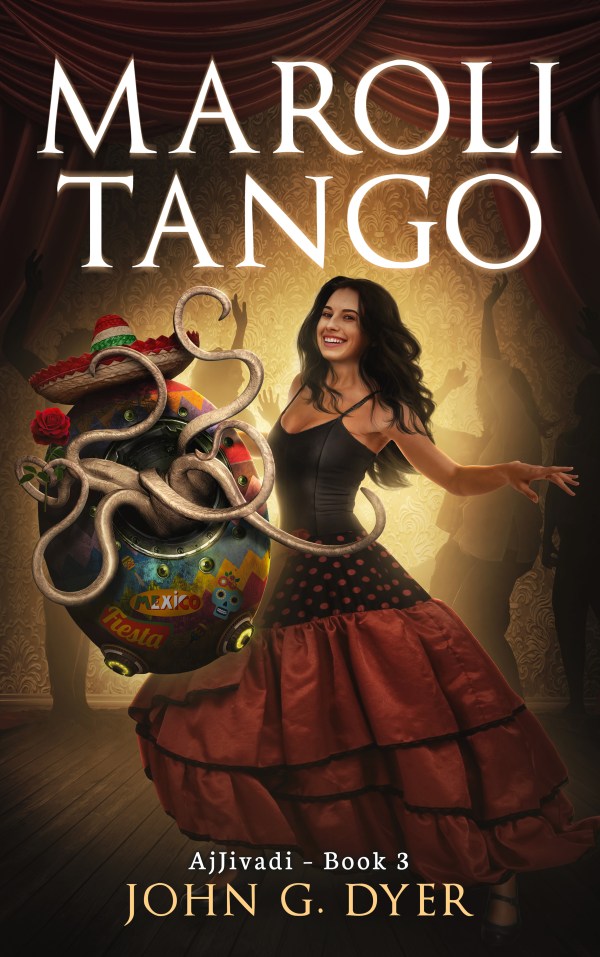
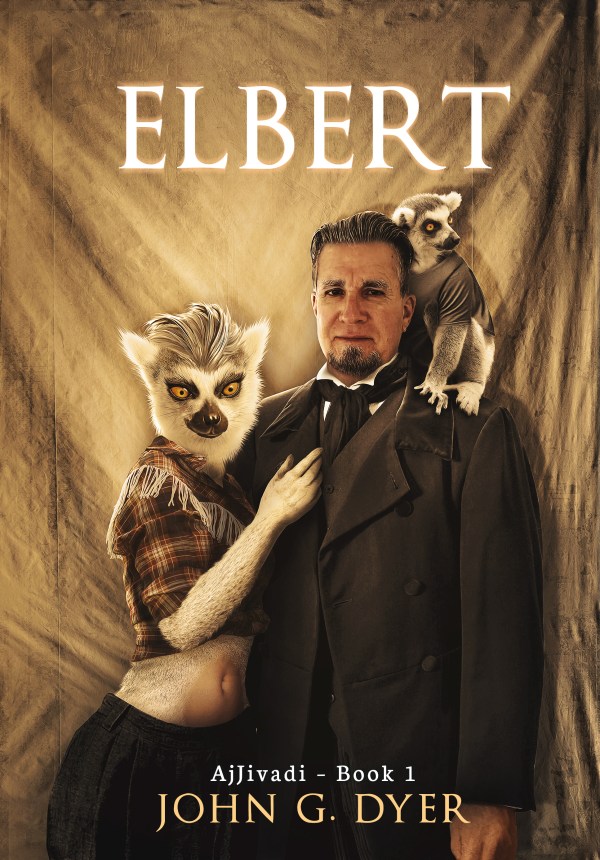
But I get it — how would you tell from the cover (featured image) what kind of book this is?
Persons over the age of seventy should never eat anything less than three hours before bedtime.
Ice cream, 9:00 PM.I knew there would be trouble. I did it anyway.
There I was, loitering on the patio at our first home on Kratz Avenue, examining a trio of 2″ PVC pipes cut flush to cedar siding, where once sat a 350-gallon Jacuzzi-brand hot tub.
“What happened?” I wondered. “Did someone find out it came from a vice-squad-raided massage parlor?”
True story. We ran household bleach through it for two days. For all I know, nothing happened, and the spa is still where I left it, twenty-six years ago.
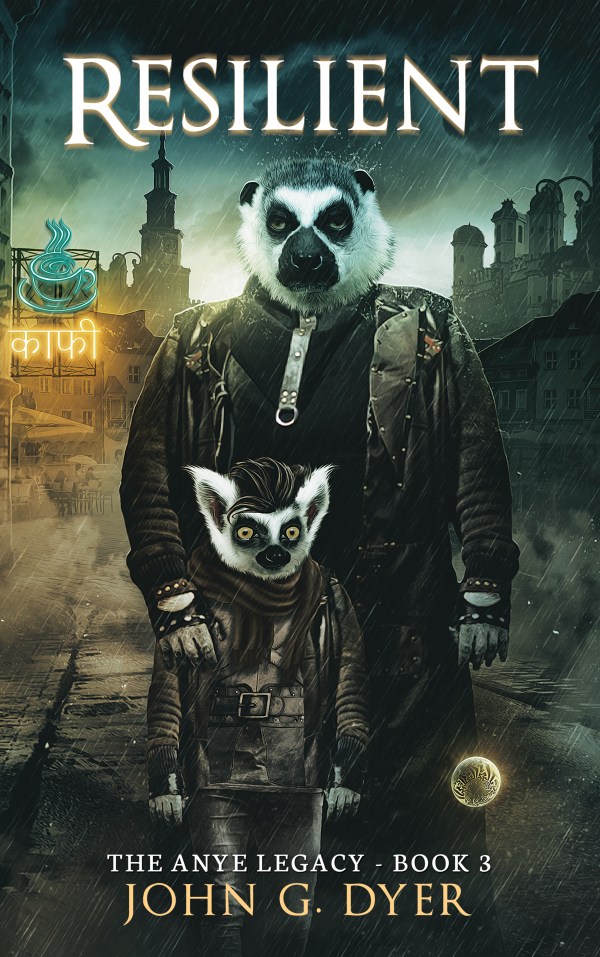
I would position Resilient as an adult science-fiction adventure with strong coming-of-age and metaphysical elements.
Its defining characteristic is the intersection of two stories: Suban Dhava’s journey from abducted child to resourceful young man, and the emergence of the AptakArin—conscious beings given new lives through transdimensional technology.
Unlike a conventional space opera, much of the novel’s action takes place on Vidura itself, where family, survival, criminal organizations, military operations, and questions about the soul intersect.
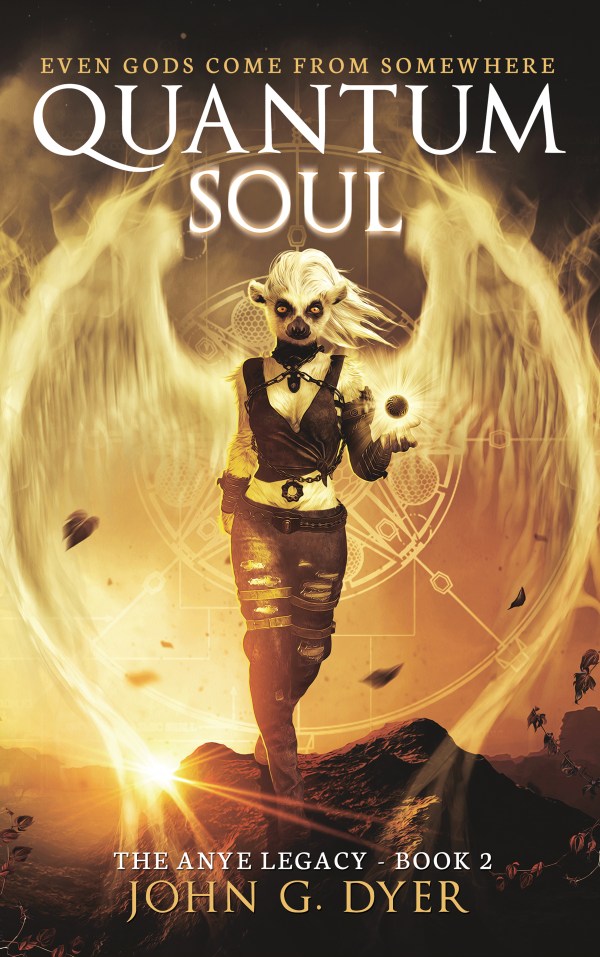
In recent days, I have been wondering what readers might think about the fact that Quantum Soul does not introduce its title concept until Chapter 84 — a third of the way through the book.
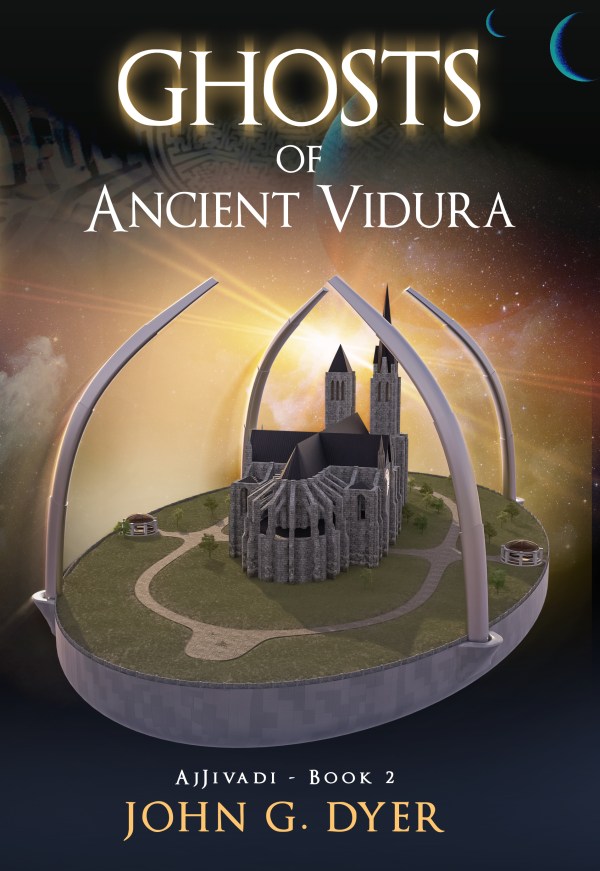
I read through Ghosts of Ancient Vidura (AjJivadi: Book 2) — confirmed it’s the direct sequel to Elbert, following the same disclosure-era storyline: hidden alien history, age-reversal tech, the maroli (spirit-possessed biotech), USAF/government entanglement, and an ancient extraterrestrial civilization on Vidura, all wrapped in your usual domestic, multigenerational, faith-adjacent tone.
Here’s where I’d place it on KDP as of the current (2026) category structure. KDP now lets you select 3 browse categories per format directly in the dashboard.
Elbert needs a somewhat different KDP strategy from Maroli Tango. Its strongest commercial identity is historical/secret-history science fiction that grows into interplanetary political adventure.
The opening is firmly planted in 1928 South Dakota, with Elbert an 83-year-old physician and Civil War veteran. The initiating revelation is that extraterrestrial Anye have been quietly living and vacationing on Earth for millennia, hidden behind Sasquatch/Bigfoot/Wendigo folklore. By Act 2 the family is traveling to Jivada; by later acts Elbert is involved in assassination attempts, economic conspiracy, political rebellion, spacecraft, and interplanetary government. And the age-reversal premise pays off explicitly: by 1934, eighty-nine-year-old Elbert appears to be about forty.
Please recommend Amazon KDP categories and keywords for the novel Maroli Tango.
ChatGPT replied:
For Maroli Tango, I would position it as adult first-contact science fiction with political-fiction crossover, not as military SF and not as YA. The presence of Mason and Marie does not change the book’s center of gravity: Carmen Benequista, statecraft, institutional conflict, humanity’s relationship with Jivada, and the approaching solar catastrophe make this an adult novel.
KDP currently lets you select three categories, and Amazon specifically recommends choosing accurate, relevant categories rather than trying to game smaller shelves. Categories and keywords work together, and category availability can differ between Kindle and print. (Amazon Kindle Direct Publishing)
Maroli Tango is science fiction built on an unusually ambitious proposition: what if first contact happened thousands of years ago, the aliens never really left, and humanity reached the twenty-first century without realizing how deeply its history had already been entangled with theirs?
That premise could have produced a conventional secret-history thriller. It does not.
Instead, Maroli Tango becomes a story about sovereignty, dependency, trust, family, faith, technology, and the uncomfortable difference between being rescued and being worthy of partnership.
The immediate problem is enormous. In 2041, the Sun is approaching a river of interstellar gas capable of fueling an extinction-scale solar event. Humanity’s technologically superior neighbors know what is coming. They possess tools that could transform Earth’s chances of survival.


Recent Comments