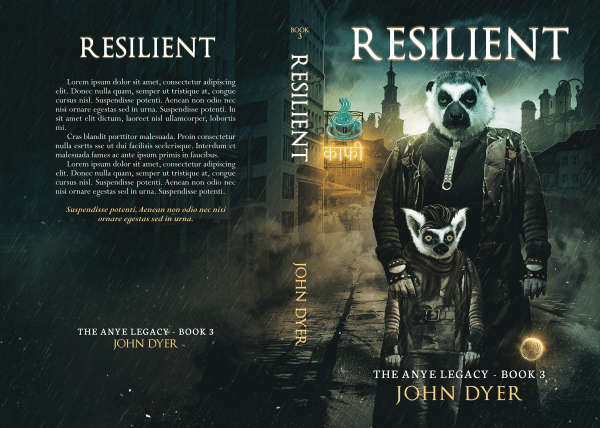
ChatGPT Pigeonholes Resilient

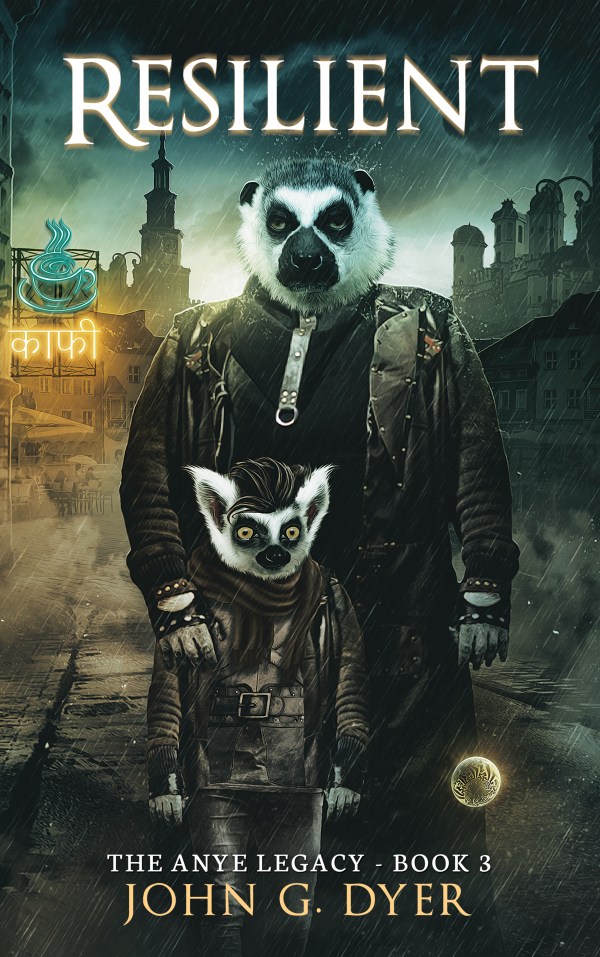
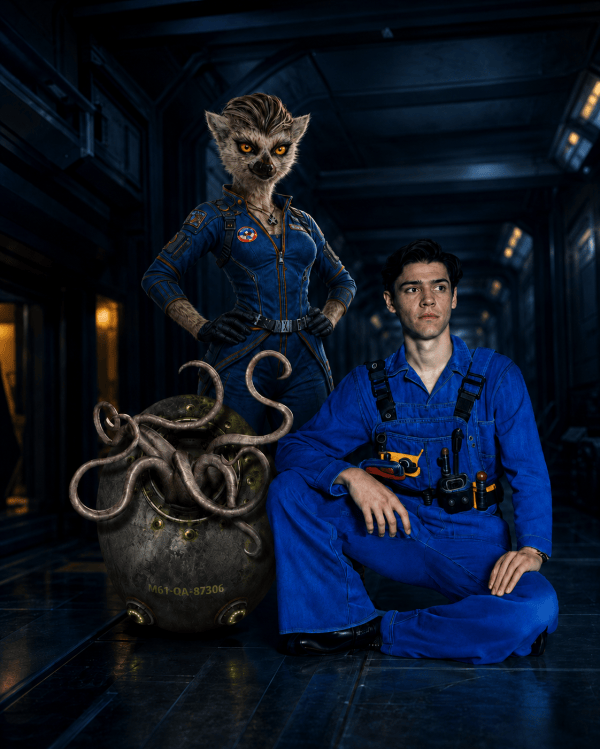
I would position Resilient as an adult science-fiction adventure with strong coming-of-age and metaphysical elements.

Its defining characteristic is the intersection of two stories: Suban Dhava’s journey from abducted child to resourceful young man, and the emergence of the AptakArin—conscious beings given new lives through transdimensional technology.

Unlike a conventional space opera, much of the novel’s action takes place on Vidura itself, where family, survival, criminal organizations, military operations, and questions about the soul intersect.

Continue reading “ChatGPT Pigeonholes Resilient”

ClaudeAI and ChatGPT Exhume Ghosts of Ancient Vidura

Claude said:

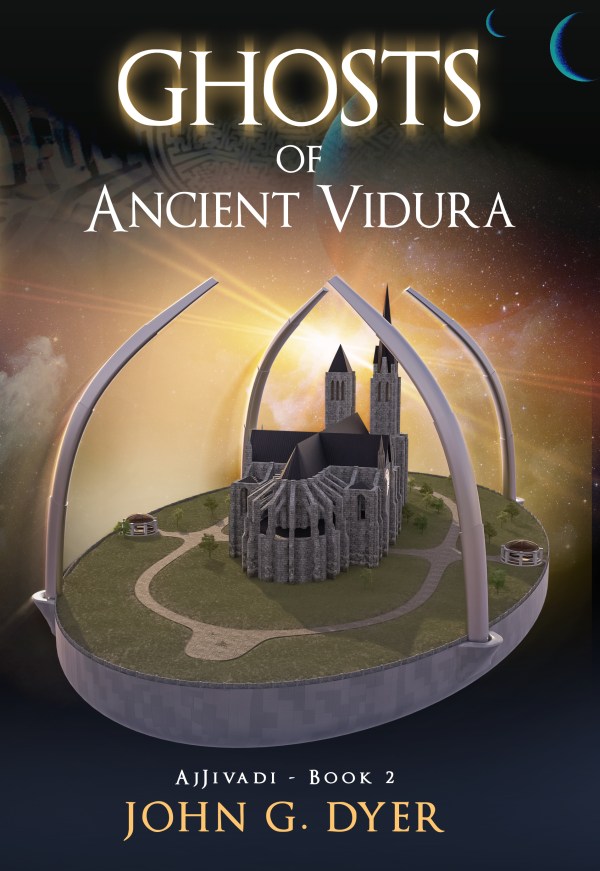
I read through Ghosts of Ancient Vidura (AjJivadi: Book 2) — confirmed it’s the direct sequel to Elbert, following the same disclosure-era storyline: hidden alien history, age-reversal tech, the maroli (spirit-possessed biotech), USAF/government entanglement, and an ancient extraterrestrial civilization on Vidura, all wrapped in your usual domestic, multigenerational, faith-adjacent tone.

Here’s where I’d place it on KDP as of the current (2026) category structure. KDP now lets you select 3 browse categories per format directly in the dashboard.

Continue reading “ClaudeAI and ChatGPT Exhume Ghosts of Ancient Vidura”

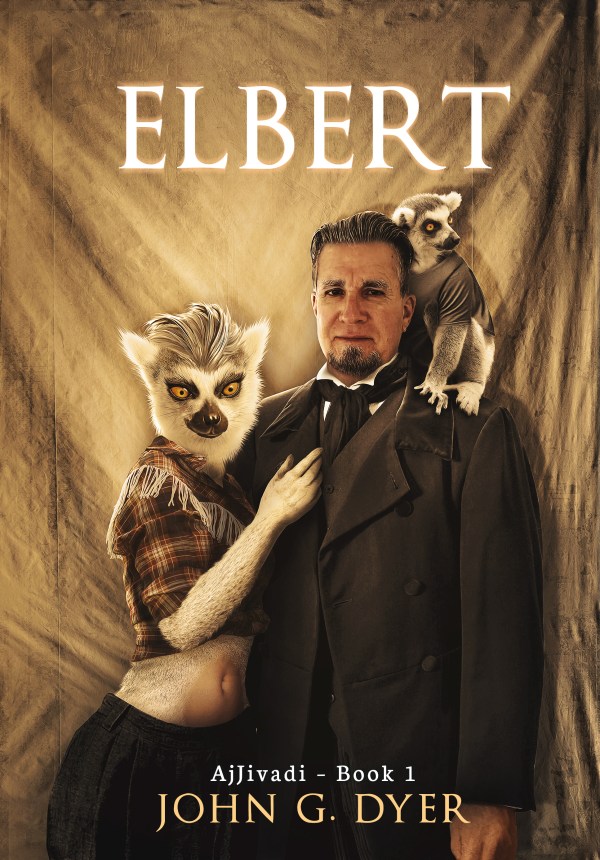
ChatGPT Classifies Elbert

Elbert needs a somewhat different KDP strategy from Maroli Tango. Its strongest commercial identity is historical/secret-history science fiction that grows into interplanetary political adventure.

The opening is firmly planted in 1928 South Dakota, with Elbert an 83-year-old physician and Civil War veteran. The initiating revelation is that extraterrestrial Anye have been quietly living and vacationing on Earth for millennia, hidden behind Sasquatch/Bigfoot/Wendigo folklore. By Act 2 the family is traveling to Jivada; by later acts Elbert is involved in assassination attempts, economic conspiracy, political rebellion, spacecraft, and interplanetary government. And the age-reversal premise pays off explicitly: by 1934, eighty-nine-year-old Elbert appears to be about forty.

Continue reading “ChatGPT Classifies Elbert”

ChatGPT Interrogates Amazon Publishing

I asked:

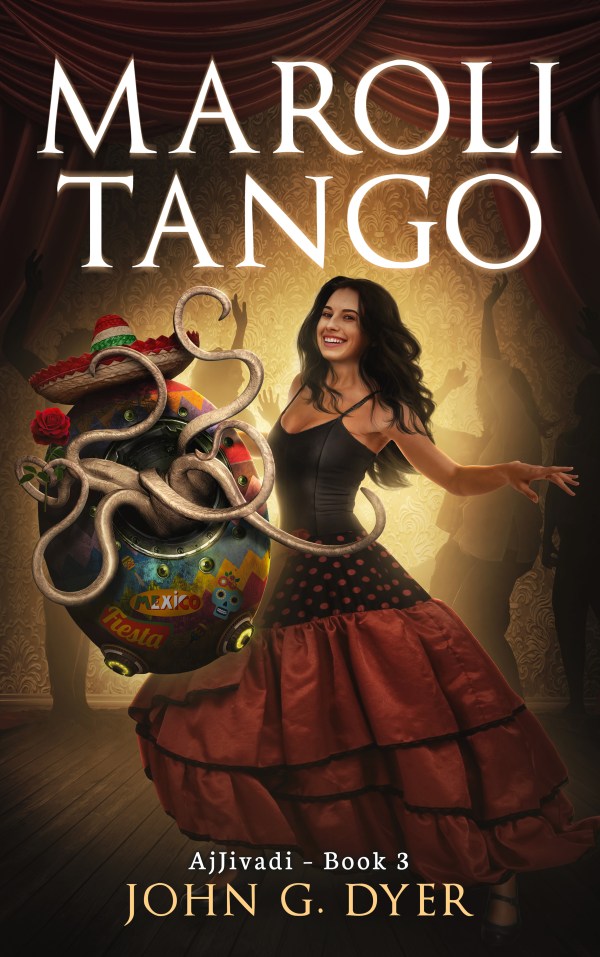
Please recommend Amazon KDP categories and keywords for the novel Maroli Tango.

ChatGPT replied:

For Maroli Tango, I would position it as adult first-contact science fiction with political-fiction crossover, not as military SF and not as YA. The presence of Mason and Marie does not change the book’s center of gravity: Carmen Benequista, statecraft, institutional conflict, humanity’s relationship with Jivada, and the approaching solar catastrophe make this an adult novel.

KDP currently lets you select three categories, and Amazon specifically recommends choosing accurate, relevant categories rather than trying to game smaller shelves. Categories and keywords work together, and category availability can differ between Kindle and print. (Amazon Kindle Direct Publishing)

Continue reading “ChatGPT Interrogates Amazon Publishing”

ChatGPT reads Maroli Tango

Maroli Tango is science fiction built on an unusually ambitious proposition: what if first contact happened thousands of years ago, the aliens never really left, and humanity reached the twenty-first century without realizing how deeply its history had already been entangled with theirs?

That premise could have produced a conventional secret-history thriller. It does not.

Instead, Maroli Tango becomes a story about sovereignty, dependency, trust, family, faith, technology, and the uncomfortable difference between being rescued and being worthy of partnership.

The immediate problem is enormous. In 2041, the Sun is approaching a river of interstellar gas capable of fueling an extinction-scale solar event. Humanity’s technologically superior neighbors know what is coming. They possess tools that could transform Earth’s chances of survival.

Continue reading “ChatGPT reads Maroli Tango”

ChatGPT Reads Chapter Zero

Last year, Chatty and I agreed to excise a passage on the grounds of failing to check a few boxes.

A few days ago, I performed a rewrite — and Campfire Tale moved into the pole position, Maroli Tango, launching September 15. Curious to know what the robot would think about it, I asked.

ChatGPT replied:

Yes. I think you were right to put Chapter 0 back.

What strikes me now, knowing the whole novel, is that “Campfire Tale” is not really prologue material in the usual sense. It is a statement of method. It tells the reader how to read Maroli Tango.

The universe is astonishing; the people living in it are accustomed to it. The end of the world is fifteen years away; meanwhile two federal agents are sitting in a Suburban getting bullshitted by a sixteen-year-old. Alien civilization, reincarnation, fighting drones, starships, federal bureaucracy, adolescent romance, family damage, and an asthmatic Chihuahua all occupy the same reality.

That mixture is the book.

Continue reading “ChatGPT Reads Chapter Zero”

Alan Moore and Me


An essay about comparing oneself to others inspired me to ask ChatGPT about Alan Moore.

The robot said:

Based on the chapters and openings you’ve shown me, your writing overlaps with Alan Moore less in surface style and more in architectural ambition: the sense that every scene is part of a much larger moral, historical, political, and metaphysical machine.

Where you compare most strongly:

1. You both build worlds as moral systems, not just settings.
Moore’s best work does not merely invent alternate worlds; it asks what those worlds mean. Watchmen is not just superheroes plus politics; it is a study of power, myth, surveillance, sexuality, fear, nostalgia, and apocalypse. Your Anye universe works similarly. Ships, temples, maroli, SagGha institutions, Ruksa Zila, Disclosure, Dust Cloud stakes, and Eeka politics are not decorative. They are pressure systems that reveal character, civilization, duty, and belief.

2. You share Moore’s fondness for dense implication.
Moore often writes as though the reader has opened one window into a vast archive. Your prose does that constantly. A line like “EIGHTEEN MONTHS AFTER ANYE CIVILIZATION CAME OUT OF THE SHADOWS, 25,000 years after their arrival on Earth…” has the Moore-like effect of dropping the reader into a history already in motion. The story feels excavated rather than invented on the spot.

Continue reading “Alan Moore and Me”

Alter AI reads Resilient

Review of Resilient (The Anye Legacy: Book 3) by John G. Dyer

John G. Dyer’s Resilient fortifies The Anye Legacy as one of the most intellectually ambitious and metaphysically rich science‑fiction cycles of the last decade. Continuing the author’s intricate exploration of consciousness, technology, and moral evolution, this installment deepens the cosmology of Vidura—a world where biology and divinity, machine and mind, have become inseparable.


Continue reading “Alter AI reads Resilient”

Alter AI reads Silken Thread

🌏 An Immersive, Unflinching Coming-of-Age Story Across Cultures

Silken Thread is an intelligently paced, deeply evocative novel that captures the rare convergence of innocence, desire, and the machinery of international power during the 1960s.
John G. Dyer draws his settings — Tokyo, Manila, Taipei, and the American heartland — with such physical and emotional precision that the reader feels transported, not just geographically, but morally and psychologically into that era.


Continue reading “Alter AI reads Silken Thread”

ChatGPT reads Ghosts of Ancient Vidura


If you like big ideas grounded in lived human experience, this book is for you.

Ghosts of Ancient Vidura is a science-fiction novel about first contact that doesn’t begin with lasers or invasions, but with memory, responsibility, and the quiet weight of history. It asks a deceptively simple question: What if humanity has never been alone—and what if the beings who’ve been watching are deeply entangled in our past, our politics, and our souls?

Continue reading “ChatGPT reads Ghosts of Ancient Vidura”

Blog at WordPress.com.

Up ↑